Review how your website appears to handle cookies, tracking scripts, third-party technologies, and user data during real visits. Auditzo helps teams check website GDPR compliance based on actual website behavior, not just policies or banners.
Not sure if GDPR applies to your website? Use the Compliance Framework Finder.
This page is designed for teams that want to check website GDPR compliance by looking at how their website behaves in practice, especially where cookies, analytics, forms, marketing tools, and third-party services may affect personal data handling.
Website GDPR compliance depends on what personal data is collected, how cookies and trackers behave, where data is transmitted, and whether users are given meaningful control before certain technologies activate. A website may appear compliant on the surface while still behaving differently during real visits.
This page is informational and intended to explain website GDPR compliance review in general terms.
Many GDPR compliance issues originate from cookies and tracking technologies that activate before users provide consent. If you specifically want to review how cookies behave on your website, you can also run a GDPR cookie compliance check to detect cookies, analytics scripts, and advertising trackers during real visits.
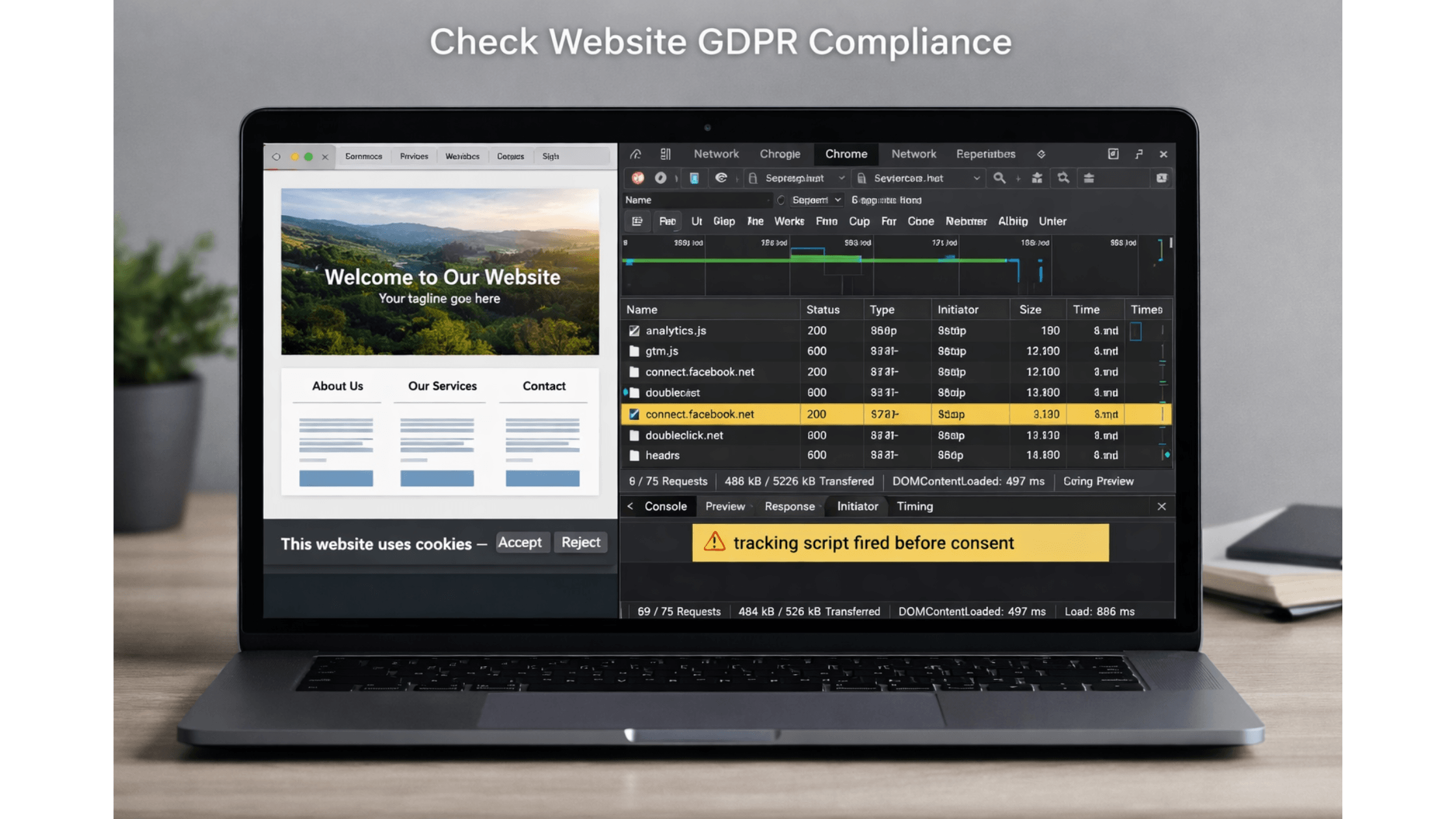
Analytics scripts, marketing pixels, or cookies may activate before a user has made a meaningful choice.
External services may receive data during page loads, sometimes through indirect integrations or tag managers.
Privacy or cookie policy language may not fully reflect what the website actually does during normal use.
New tools, scripts, or marketing changes can alter compliance posture without obvious visual changes on the site.
Auditzo reviews website behavior during real visits and documents how cookies, scripts, forms, trackers, and third-party technologies appear to operate. For a deeper review, teams can run a full GDPR compliance audit to analyze tracking behavior and data flows across their website.
Focuses on what the website appears to do during normal user visits, not just what is disclosed.
Helps surface scripts, cookies, trackers, and third-party activity that may affect consent expectations.
Reviews how personal data may appear to move through website components and third-party connections.
Findings are organized for internal review, follow-up, and remediation planning.
Clear sections and practical summaries to help teams understand website behavior more easily.
Organized observations covering cookies, scripts, third-party activity, and user-facing behavior.
Focused on what was observed during page loads and normal website visits.
Helpful even for teams without specialist legal or technical backgrounds.
Reports are designed to support internal review, remediation planning, and discussions with legal counsel where needed.
A website GDPR compliance check is especially useful when tracking setup, data collection methods, or regional user exposure changes over time.
A website GDPR compliance check reviews how cookies, scripts, forms, trackers, and third-party technologies appear to behave during real visits, helping teams understand practical compliance exposure.
It typically reviews cookies, tracking scripts, consent behavior, forms, third-party activity, and other website behaviors that may affect personal data handling.
Policies are important, but practical compliance also depends on what the website actually does during real visits, including how scripts, cookies, and forms behave.
Websites can behave differently from what policies or banners suggest. Reviewing real behavior helps teams understand what appears to happen in practice.
A compliance check helps identify common issues related to cookies, scripts, and data flows during website visits. Teams that need deeper analysis can run a GDPR compliance audit for a more detailed review.
Use a short assessment to identify which privacy and data protection frameworks may be relevant based on your business model, website setup, and user regions.
Start a website compliance check and receive a clear report by email. No legal expertise required.